


Ravi has spent a decade building technology ventures at the intersection of financial services and product innovation. One problem kept following him from company to company, customer to customer: businesses needed real-time financial data and faster payments, and the infrastructure to deliver it simply wasn’t built for them.
Technological advances including "open banking" had already proven what was possible. The UK was processing tens of millions of open banking payments every month, growing over 50% year-on-year. The regulation existed, the standards existed and still, the majority of businesses couldn’t access any of it in a practical way — not without months of costly integration and systems that were never designed with them in mind.
So Ravi built Finexer to close that gap.
A frustration that kept repeating itself
94% of small and medium-sized businesses couldn’t access real-time financial data in any practical way. Billions were lost annually through inefficient payments and delayed settlement. The infrastructure existed, it just wasn’t built for them.
“This isn’t just a commercial opportunity,” Ravi says. “It’s about whether the next generation of British innovation gets to participate in the financial infrastructure their own country invented.”
Why the UK, and why now
When Ravi decided to build open banking infrastructure, there was only one obvious place to do it. The UK isn’t just ahead of the curve on this, it set the curve. Every other market is downstream of decisions being made in London. If you’re building at the source of a structural shift in global finance, you belong at the source.
But it wasn’t just geography. The UK has 16.5 million monthly active open banking users. The sector generates £4 billion in annual economic value. The commercial ecosystem is more mature here than anywhere else in the world. And crucially, the timing was right: the market was ready to adopt at scale precisely when Ravi was ready to build.
There’s a rare kind of opportunity that opens up when the regulatory conditions, the market maturity, and the technology all align at once. Ravi saw it. He moved.
The slow start was the strategy
Launching in a regulated environment is not like launching a consumer app. There are no shortcuts worth taking.
The early months were defined by invisible work: navigating FCA authorisation, building compliance systems, getting every component of the foundation exactly right. Progress felt slow to the outside world. Internally, Ravi knew it was the only way.
“We could have launched faster by cutting corners,” he says plainly. “We didn’t.”
That patience is now one of Finexer’s most defensible assets. Finexer holds a direct FCA dual licence, covering 99% of UK banks through direct integration — not through third-party intermediaries, not through workarounds. Every customer who chooses Finexer cites the licence as the reason. The slow start built the moat.
What surprised Ravi along the way was how open the ecosystem actually was. He’d expected regulators to be remote and difficult to engage. The FCA, the PSR, the OBL — the reality was the opposite. There’s a genuine culture of collaboration in UK fintech. The market rewards execution. And once you’re in, it backs you.
What Finexer actually does
Accounting software, lenders, payroll providers, ERPs, and vertical fintechs: platforms that need real-time bank connectivity and Pay-by-Bank payment capability but have historically found it impossible to access in a practical, affordable way. Finexer gives them the infrastructure layer they’ve been missing.
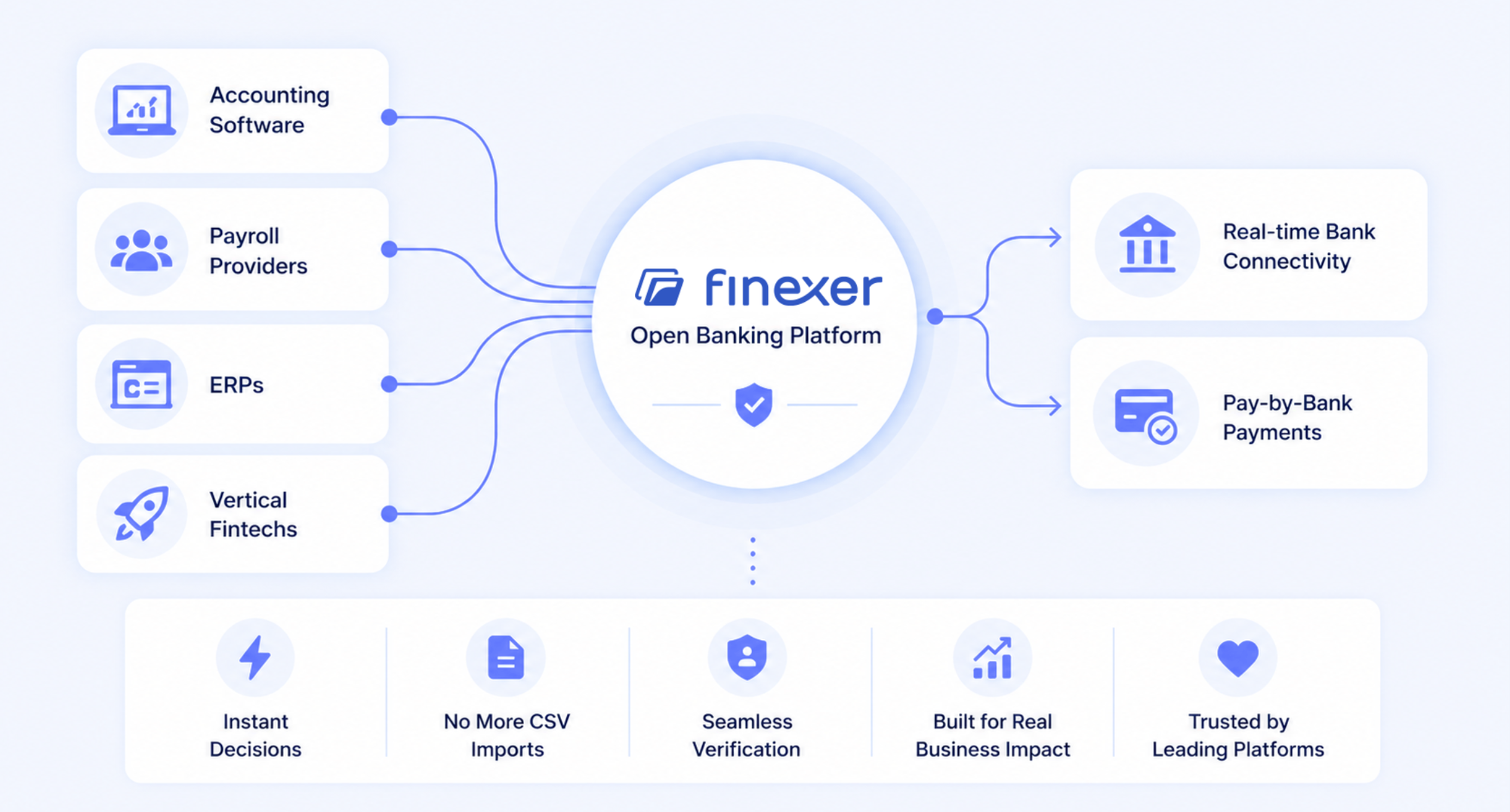
The impact shows up in the customer stories. A lending platform suddenly approving borrowers in seconds rather than days. An accounting software’s users stopping the manual import of CSV bank files for the first time in a decade. A digital identity provider seamlessly verifying customers through their own bank. These aren’t incremental improvements. They’re the difference between infrastructure that works and infrastructure that doesn’t.
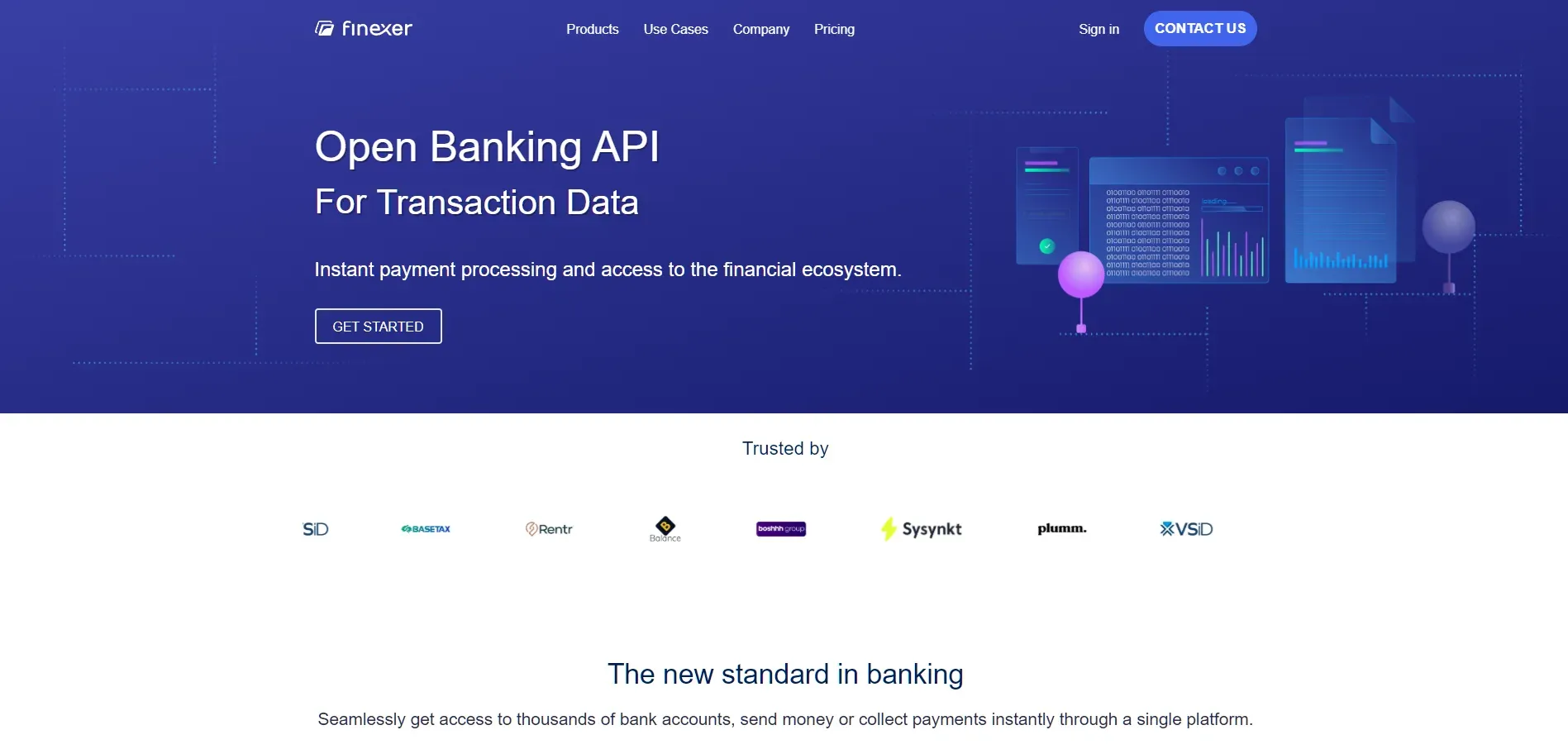
Customers including VirtualSignature-ID, Sysynkt, Boshhh, Plumm, Committee, and Rentr have stayed close. Near-zero churn over 18+ months. Platforms don’t leave infrastructure they trust.
Explore Finexer’s customer stories at finexer.com/customers, or watch the product in action at youtube.com/watch?v=g8V5SPw0pr8.
The community he didn’t expect to find
Ravi came in expecting the UK fintech community to be competitive and closed. He found the opposite.
Tech Nation Libra, FinTech Wales, SFC Capital, Mountside Ventures, the Startup Coalition, Funding London — there’s a genuine ecosystem here that wants infrastructure businesses to succeed, because the health of the whole sector depends on them. In early 2026, Finexer was recognised in the Sifted 100 UK & Ireland 2026 cohort, a signal from the institutional fintech community that Ravi’s approach is being noticed in the right places.
For international founders, particularly those navigating regulated sectors, this kind of community matters more than it might seem from the outside. It’s not just about visibility. It’s about knowing you’re not building alone.
Where Innovator International came in
There is a particular kind of difficulty that comes with launching a regulated fintech business as an international founder. The technical challenge is significant. The regulatory challenge is immense. And the personal challenge, doing all of it in a new country, with no local shorthand, while the early work remains completely invisible is something that doesn’t show up in any business plan.
That’s where the Innovator International team made a real difference.
“What’s stood out isn’t just the structured guidance through the visa and business establishment process,” Ravi reflects. “It’s the willingness to actually understand what we’re building. When you’re navigating a UK launch as an international founder in a regulated space, that quality of engagement makes a real difference. Especially in those early months, when the work is invisible to everyone else and a steady, knowledgeable partner is exactly what you need.”
The team didn’t treat Finexer like any other startup. They engaged with the specifics including the regulatory nuance, the dual-licence complexity, the longer timelines that come with building something that has to be right before it can be fast. That responsiveness and genuine curiosity, Ravi says, removed a layer of background noise that founders in regulated sectors can’t afford to carry.
His one suggestion for what could make the experience even stronger? More sector-specific introductions. Regulated fintech founders face different ecosystem dynamics than SaaS or consumer founders, and tailored connections to the right institutional and commercial networks would amplify what’s already working well. It’s the kind of feedback that comes from someone who values the relationship enough to want it to grow.
What comes next
The next six months are already mapped. Finexer is closing its Series A funding round. The target is 100 B2B customers by the end of 2026 — a path they’re on track to meet, with consistent month-on-month growth above 25%. And Finexer is preparing to go live with commercial Variable Recurring Payments ahead of the 2027 mandate, which Ravi describes as one of the most consequential UK payment infrastructure shifts of the decade.
In two years, the picture broadens considerably: 300+ customers, profitability, and full European licensing. The same mid-market infrastructure gap that Finexer has identified in the UK exists across the Eurozone. And Ravi intends to fill it.
The goal beyond the numbers is deceptively simple: to be the default infrastructure layer that UK and European mid-market platforms build on. The company that, when an accounting platform or a lender or a payroll provider says “we need real-time bank connectivity,” is the obvious answer.
His advice for the next wave
Ravi’s advice to founders considering the UK is as direct as his own story. Focus on solving a real problem and stay close to it. The UK rewards substance. And find your structural advantage: build something where being here gives you an edge you couldn’t replicate elsewhere.
He’s also honest about the thing he wishes he’d understood earlier: in regulated fintech, the early work is invisible, and that’s not a bug. It’s the feature. Building in a regulated space takes longer upfront. But it compounds much faster once you get it right. The founders who come out ahead are the ones who understand that distinction early enough to be patient about it.
The infrastructure their country invented
There is something quietly compelling about what Ravi is building. Open banking was invented in Britain. The standards, the regulation, the mandate — all of it originated here. And yet the majority of British businesses still couldn’t access it in any practical way.
Finexer exists to close that gap. To make the financial infrastructure the UK created actually work for the businesses the UK is built on.
Ravi didn’t arrive here with a finished blueprint. He arrived with a decade of frustration, a clear understanding of the problem, and the patience to build the foundation before the product. With Innovator International steadying the journey through its most uncertain early stages, and the UK’s own fintech ecosystem gathering behind him, that foundation is now very much in place.
The plumbing of British business is getting an upgrade. And Ravi is the one holding the wrench.
Connect with Ravi on LinkedIn: linkedin.com/in/ravirnjn
Product demo: Watch on YouTube


