
How Sean Zhu built Hyper EV from a vision into a settled UK reality, and what his journey proves is possible for every founder on this route.
Sean Zhu arrived in the UK in March 2023. Three years later, he holds Indefinite Leave to Remain, granted by the Home Office within weeks of submission. A founder who built something real, documented it properly, and got the outcome the route is designed to deliver.
For many founders in this community, settlement still feels like a distant and uncertain aspiration. Something that happens to other people. Something that might not happen at all.
Sean’s story is living proof that it can happen to you, in the same timeframe, through the same route. Here is how he did it.
Two Worlds, One Gap
Sean grew up in Luoyang, central China, but his professional world had long since expanded well beyond it. For over a decade, he worked across international renewable energy and EV supply chains, spending much of his time operating between China and Europe, connecting manufacturers, power electronics suppliers and EV system integrators across continents.
During that time, he kept noticing the same structural gap. Europe was accelerating its energy transition at pace, pushing hard on electrification of transport, distributed generation and residential storage. Meanwhile, China had quietly built the world’s most advanced and cost-efficient supply chains in lithium batteries, power electronics and EV components. Two enormously powerful ecosystems, but poorly connected.
European markets needed regulatory compliance, safety certification and long-term reliability. Chinese manufacturers had the scale and engineering capability, but frequently needed alignment with European design standards and market expectations.
The Business: An Ecosystem, Not Just a Product
Hyper EV was built on a deceptively simple observation. Energy transition at the household level is not driven by a single product. Solar generation, energy storage, EV charging and electric vehicles are not separate markets. They are interconnected components of a single energy loop, and if one element is missing the system is incomplete.
Sean’s vision was to bridge those elements into a coherent ecosystem, combining reliable hardware, compliant design and deep supply chain integration to support the full residential energy transition. A UK-registered company would serve as a trust anchor between European markets and global manufacturing partners, bringing together credibility, regulatory alignment and commercial capability in a way neither side could achieve alone.
This was not a simple trading proposition. It involved product development, design protection, manufacturing partnerships and navigation of complex regulatory frameworks.
The Decision to Come to the UK
Sean's target customers were in Europe. Certification discussions and compliance conversations required a real presence on the ground, not just a remote relationship. And the Innovator visa route offered a clear and structured pathway for founders building genuinely innovative, scalable businesses in the UK. For Sean, it felt like a window opening at the right moment.
Beyond the commercial logic, there was a deeply personal dimension too. He wanted long-term stability for his family. Good schooling for his child. A regulatory environment that rewarded discipline and structure, the kind of environment he had always thrived in. The UK offered all of it.
The move, he says, was about building at the intersection of two worlds.
Choosing Innovator International
When Sean began evaluating which endorsing body to work with, he approached the decision with the same rigour he applies to every strategic choice. He was looking for a framework.
"For me, endorsement was not simply about obtaining a letter," he explains. "It was about aligning with a body that understood commercial reality and expected measurable progress."
What drew him to Innovator International was their structured, transparent approach from the very first interaction. Innovator International stood out for the seriousness of its assessment process. Their emphasis on regular milestone reviews, clearly defined expectations and a genuine focus on long-term business viability resonated immediately with how Sean wanted to build Hyper EV.
His first impression was of an organisation that prioritised durability over convenience. That alignment of values mattered. He was building something real, and he needed an endorsing body that would support him, whilst holding him to that standard.
The First Year: Building Foundations
Those early months in Liverpool were about building stability. Company registrations, banking arrangements, regulatory alignment for energy products, and reconnecting with European contacts who had been waiting in the wings.
One thing that genuinely surprised him about the UK market was how much trust mattered. Not just product performance, but documentation quality, after-sales support, contractual clarity and long-term accountability. In fast-moving supply chain environments, conversations tend to focus on price and specifications. In the UK, customers also want to know you will still be there when something needs resolving years down the line. That shift in emphasis required real adjustment, and it ultimately made Hyper EV a stronger business.
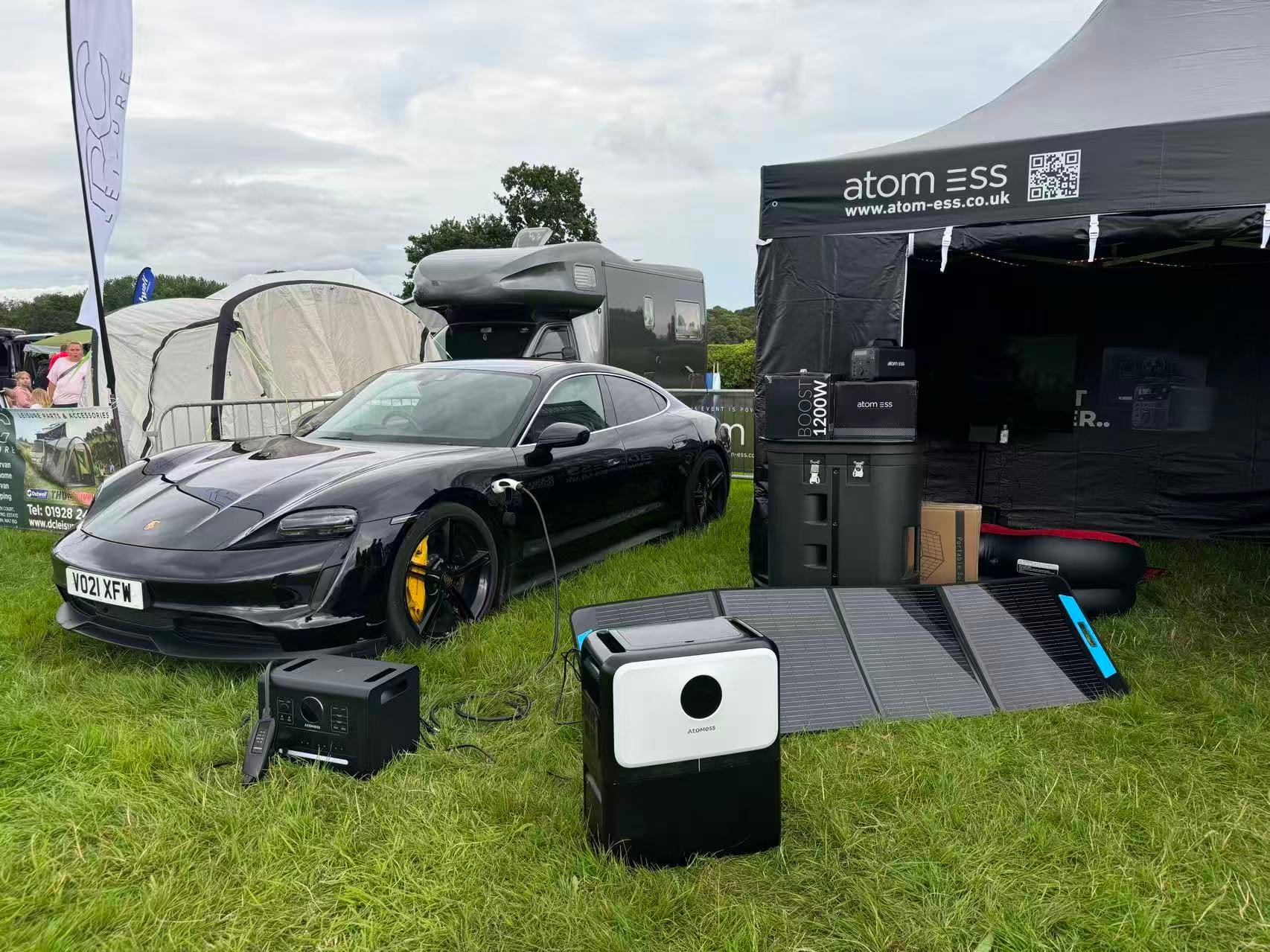
The turning point came at an industry exhibition shortly after arrival. Presenting products directly to customers, installers and distributors, Sean received detailed technical questions and substantive follow-up conversations that confirmed the ecosystem approach was gaining interest. It was the moment the journey shifted from preparation to validation, and Sean describes it as a genuine milestone.
More Than an Endorsing Body
Beyond the formal milestones, there was something else Sean found genuinely valuable: the community.
Entrepreneurship across borders can be isolating. The Innovator International network connected Sean with fellow founders who understood the journey from the inside with people navigating the same complexities, facing the same uncertainties, building their own businesses in a new country. Those honest conversations, shared experiences and practical exchanges carried a value that is difficult to quantify but impossible to overstate.
It is a dimension that often goes unmentioned in the story of a visa approval. But Sean is clear that the visible outcomes rest on many invisible contributions, and the community around Innovator International was one of them.
From that first structured assessment to the moment the ILR approval arrived in 2026, Innovator International provided something rare: not just process, but partnership. Not just endorsement, but accountability. And when it mattered most, not just guidance, but genuine support.
Navigating the ILR Stage with Clarity and Confidence
If the endorsement stage tested Sean's business thesis, the ILR application tested everything else: the documentation, the financial records, the evidence of genuine innovation, the coherence of the entire journey from first arrival to settlement.
Innovator International's support at this stage was structured and timely. They provided a clear checklist, conducted detailed documentation reviews and ensured that evidence was organised and presented in a way that aligned directly with the settlement criteria. Their feedback was practical, actionable and delivered with the kind of responsiveness that matters when timelines become tight.
"The greatest value," Sean reflects, "was not in rewriting the business narrative. It was in ensuring that what had been built over three years was presented clearly and aligned with regulatory expectations."
Facing Scrutiny: What the Home Office Actually Asked
This section matters, because it is the part that makes many founders nervous.
Sean describes the ILR application itself as feeling like submitting a dissertation. Business plans, management accounts, financial records, intellectual property documentation, commercial agreements, proof of active trading. Every element had to align. Revenue figures needed to correspond with bank statements. Investment had to be clearly traceable. Innovation claims required supporting technical documentation.
And then the Home Office asked further questions. They asked how customers purchase products. They requested detailed clarity on the manufacturing process for EV charging equipment and integrated energy storage systems. They questioned product development timelines. They scrutinised revenue forecasts and intellectual property strategy.
Here is what Sean wants every founder to understand about that stage: those questions are normal. Receiving a further information request does not mean something has gone wrong, it actually means the process is working as intended. What matters is how you respond, and the answer is always the same: calmly, clearly and with well-organised evidence.
Weeks after submission, it was approved.
Where Sean and Hyper EV Are Headed
Today, Hyper EV is lean, operational and commercially active, coordinating product design, manufacturing partnerships and market development across the UK and international markets. The business bridges European regulatory standards with established Asian supply chain capability in exactly the way Sean always envisioned.
The next phase involves expanding into continental Europe, the United States and selected African markets, approached with the same disciplined, compliance-first thinking that has characterised the journey from the start.
ILR, Sean says, is not an endpoint. It is a foundation. The direction has not changed. Only the stability that it brings.
What He Would Tell You If You Were Starting Today
Sean is not someone who wraps his advice in platitudes. When we asked what he would tell founders at the start of this journey, his answer was practical and direct.
Plan earlier than you think you need to. Build in more margin than feels necessary. Treat time as fixed, not flexible, because in structured regulatory frameworks, administrative requirements always take longer than expected. The ILR stage rewards founders who have been methodically documenting their journey from the very beginning, not those who try to reconstruct it under pressure at the end.
Do not make the visa the primary objective. Focus first on building a genuinely viable business that solves a real problem and has credible revenue pathways. Regulators and endorsing bodies can sense the difference between a business that exists to support a visa application and one that simply has a visa because the business is real. When the business is structurally sound, the paperwork becomes documentation of reality rather than an attempt to construct it.
And trust the decision you have made. Doubt is natural. Uncertainty is part of the process. What matters is not the absence of difficulty, but the consistency of direction.
Find out more: hyper-ev.co.uk
Connect with Sean on LinkedIn
... and for more information on how Innovator International help founders like Sean to realise their business potential, have a look at our Pulse Accelerate programme:
 Innovator International