


There's something magical about stepping into a British Christmas market for the first time. The twinkling lights strung between wooden chalets, the smell of cinnamon and roasted chestnuts hanging in the cold air, the sound of carol singers competing with the hum of cheerful crowds. It feels quintessentially festive, undeniably European, and surprisingly... German?
If you're new to the UK, Christmas markets might seem like an ancient British tradition. They're not. Most of them have only existed since the early 2000s, imported wholesale from Germany and Austria. But the British have embraced them with the kind of enthusiasm usually reserved for queuing and talking about the weather. Within two decades, they've become as essential to the British Christmas as mince pies.
For entrepreneurs and innovators settling into UK life, Christmas markets offer more than just festive shopping. They're a crash course in British social behaviour, a networking opportunity disguised as a night out.
The Mulled Wine Situation
If you attend a British Christmas market, you will find an excess of "mulled wine". Even people who don't particularly like wine will be seen clutching steaming mugs of the stuff.
It's worth noting at this point that mulled wine CAN be for everyone - any supermarket or store will sell a non-alcoholic version which is effectively a dark grape juice (or similar) with the same additional spices.
British mulled wine comes in two varieties: the kind that tastes like Christmas in a cup (cinnamon, cloves, orange, warmth) and the kind that tastes like someone boiled red wine with a handful of potpourri and called it festive. You won't know which you're getting until you've paid your £6 and taken that first sip.
Here's the insider trick: most markets charge a deposit on the mug, usually £3-5, which you get back when you return it. But those mugs have become collectables. Each market has its own design, and people genuinely keep them as souvenirs.
The mulled wine itself serves an important social function. It gives you something to hold, something to sip, and a reason to keep you warm whilst stood around chatting in the cold.
The Bratwurst Phenomenon
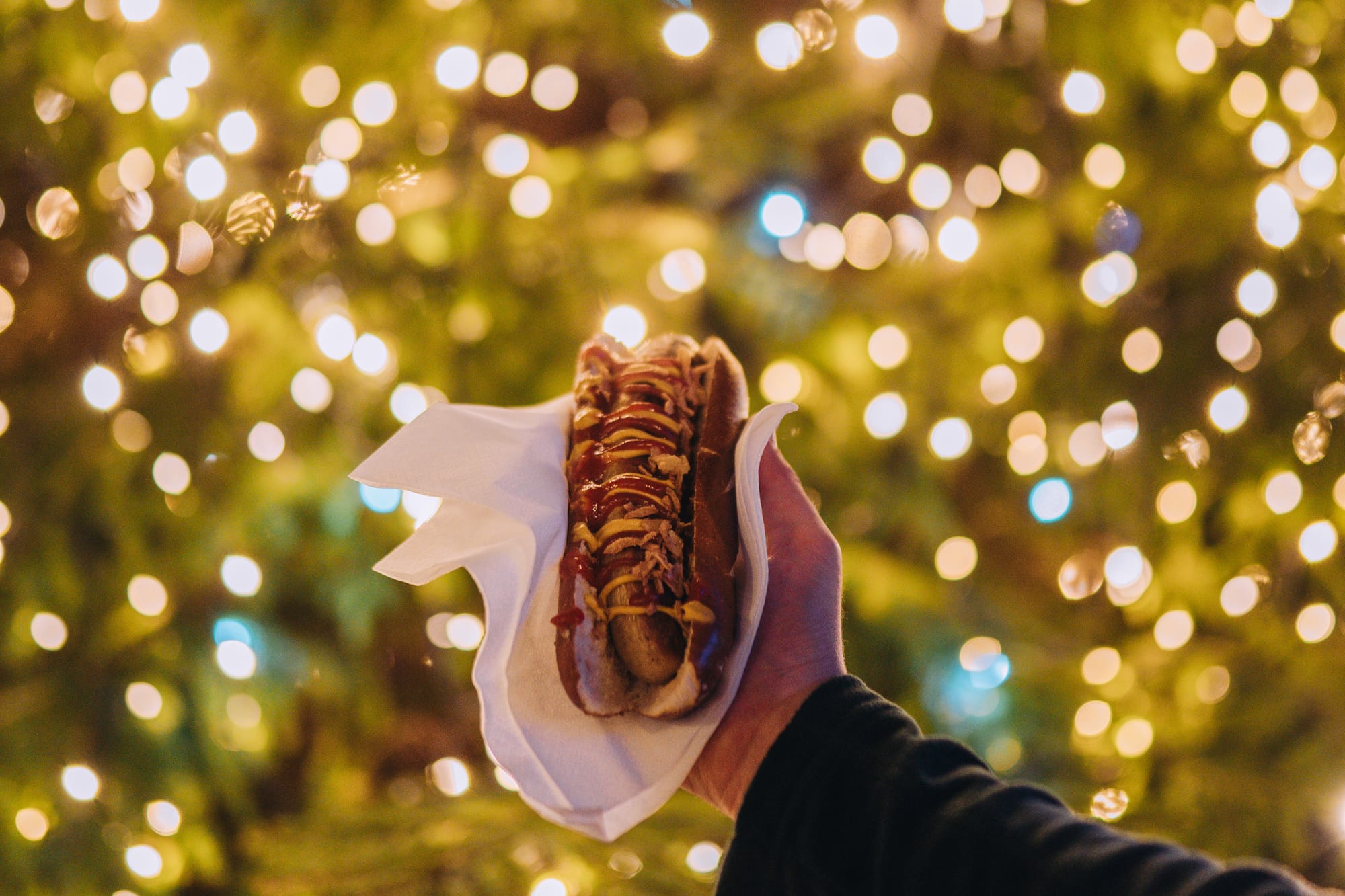
Now, about those German sausages. Yes, this is Britain. Yes, we have our own sausages. Excellent sausages, in fact. Cumberland, Lincolnshire, the full English banger in all its glory. So why, at every British Christmas market, are people queuing twenty-deep for a bratwurst in a bun?
The honest answer is that it's part of the imported aesthetic. British Christmas markets are essentially German-themed winter festivals that happen to be located in Birmingham or Manchester. The food follows suit. You'll find bratwurst, pretzels, stollen, schnitzel, and something called raclette that involves melted cheese scraped onto things.
One of our favourites is always the hog roast. When you spot a British vendor doing pulled pork rolls or hog roast sandwiches, that's often better value and more flavourful than the imported options. The German-style roasted almonds are genuinely lovely, though hideously overpriced. And if you see a stall doing Yorkshire pudding wraps (yes, that's a thing), try one. It's not traditional to anywhere, but it's delicious and very British in its willingness to put anything inside a Yorkshire pudding.
The key is to eat early. By 8pm, you're not getting food, you're getting queues. Arrive around 6pm, eat something warm and substantial, then you can graze on roasted chestnuts and churros as the evening progresses.
What to Actually Buy (And What to Avoid)
This is where Christmas markets get tricky. Every stall looks enchanting. Everything seems like it would make a perfect gift. The reality is rather different.
Tourist tat comes in predictable forms: mass-produced decorations claiming to be handmade, generic jewellery with 200% markup because it's displayed on rustic wood, and anything with "I ❤️ [City Name]" on it. If you can't tell who made it or where it actually came from, walk on.
What's actually worth buying? Look for genuine craft vendors. Potters, woodworkers, jewellers who'll chat about their process. They're usually towards the edges of the market where rent is cheaper. Locally made food gifts are solid choices: artisan chocolates, small-batch preserves, speciality biscuits. They're practical, they travel well, and they're distinctly British rather than generically festive.
The wooden toys can be lovely, but check they're actually hand-carved rather than factory-made. Same with the leather goods and ceramics. A good rule: if there are twenty identical items, it's mass-produced. If each piece is slightly different, someone probably made it.
Candles are a safe bet if you need gifts. The UK has developed something of a candle obsession, and Christmas markets usually have several artisan candle makers selling genuinely nice products. Your British colleagues will appreciate them, and they're easier than trying to guess someone's clothing size or taste in decorations.
It's so easy to go to a Christmas market and spend a lot of money on things that you don't need, don't want and later regret. But that shouldn't stop you from having a fabulous time finding some great gifts and enjoy the food and drink while you're there.
Which Markets Actually Matter
Britain now has hundreds of Christmas markets, ranging from charming to chaotic. Here's what you need to know and where to find them:
Birmingham's Frankfurt Christmas Market is the largest outside Germany and Austria. It's vast, genuinely impressive, and absolutely rammed with people. If you like crowds and scale, this is your destination. If you value personal space, perhaps not.
Manchester Christmas Market sprawls across the city centre in multiple locations. It's more spread out than Birmingham's, which somehow makes it feel both bigger and less overwhelming. The mix of stalls is good, and Manchester does the atmosphere particularly well.
Bath Christmas Market is the one everyone photographs. Set against Georgian architecture, lit up at night, it's postcard pretty. It's also expensive, touristy, and packed, but undeniably beautiful.
Edinburgh's market is big, festive, and comes with a funfair attached, which either adds to the charm or the chaos depending on your tolerance for screaming children on rides. The backdrop of Edinburgh Castle doesn't hurt.
Winchester's market is smaller, more traditional, and often gets voted one of the best. It's set in the cathedral grounds, and something about the combination of medieval setting and Christmas lights just works.
Leeds, Liverpool, and Bristol all have solid markets worth visiting if you're nearby. Cardiff's is growing each year. Smaller cities often have more intimate affairs that can be just as enjoyable without the crush.
The truth is, most British Christmas markets are fairly similar in what they offer. The difference is in atmosphere, location, and how crowded they get. Your local one is probably fine. The distant famous one might be lovely, but it'll be expensive to reach and heaving with people who had the same idea.
The Unwritten Rules
Like everything in Britain, Christmas markets come with social conventions nobody explains.
You're expected to walk slowly and stop suddenly without warning. This is how everyone moves. Fighting it will only frustrate you. Accept the shuffle.
When buying food, queue properly. Hovering near the front, hoping to catch the vendor's eye is very un-British and will get you frozen out harder than the December air.
If you're in a group, don't walk four-abreast blocking the entire pathway. This is one of the few things that will break British politeness. People will tut. Some might even say "excuse me" in a tone that means something quite different.
Dress accordingly. Britain in December is cold, and Christmas markets are outside.
It's also perfectly acceptable to go multiple times. Christmas markets run for weeks, and locals often visit several times throughout the season. Your first visit will probably be with colleagues or new friends as a social event. Subsequent visits might be actual shopping missions or date nights. This is normal behaviour.
HOWEVER: please don't leave it until a few days before Christmas! Because most of the vendors want their own Christmas break, and many have come to the UK from overseas, they tend to close around a week before Christmas.
Making the Most of It
Here's how to actually enjoy a Christmas market rather than just enduring it: go during the week if possible. Weekend crowds are intense. Tuesday evening is usually perfect. It's busy enough to feel festive but not so packed you're shuffling along in human traffic.
Wrap up properly. You'll be outside for longer than you think. Britain doesn't do extreme cold, but it does do damp cold that seeps into your bones. Layer up, wear decent shoes, and bring a scarf.
Set a budget before you arrive. Markets are designed to extract money from you via the irresistible combination of festivity and mulled wine. Decide what you're willing to spend and try to stick to it. Try being the operative word.
If you're taking clients or colleagues, Christmas markets are actually brilliant for relationship-building. The informal setting, the festive mood, the shared experience of questionable food choices, it all creates connection in a way that dinner reservations sometimes don't. Just maybe stick to one or two mugs of mulled wine each if you're trying to stay professional.
For families, weekday afternoons are magical. It's light enough to see everything, quiet enough to move around, and you can be home before the evening crowds arrive. Markets usually open around lunchtime and run until 9 or 10pm.
The Bigger Picture
Christmas markets, for all their commercial trappings and borrowed traditions, have become genuinely important to British winter social life. They're where people meet friends, where dates happen, where families make memories. They're imperfect and overpriced and sometimes disappointing, but they're also twinkling and warm and filled with people trying to create something magical in the depths of winter.
For someone building a life in the UK, they're worth experiencing. Not because they're authentically British, whatever that means these days, but because they're authentically how modern Britain does Christmas. They're where you'll run into neighbours, colleagues, and that person you vaguely know from the gym, all clutching identical mugs of mulled wine and pretending their noses aren't running from the cold.
Go at least once. Buy something handmade if you can find it. Drink the mulled wine even if it's not very good. Stand there in the cold with everyone else, watching the lights twinkle and the crowds shuffle past, and understand that this, improbably, is now a British tradition. We might have imported it wholesale from Germany, but we've made it our own through sheer force of enthusiasm and questionable weather choices.
We hope you enjoy, please do tag us in any posts from your festive adventures! Find us on both Instagram and LinkedIn


