


The majority of emails we receive ask about our application process. Can we provide our opinion on an idea before the assessment? Why have I not heard anything during my assessment? Are the assessors appropriately qualified?
So, we thought we would answer all of these questions for you in a single post by providing an overview of our entire application process.
Context
To put this all into context, in 2022 we were one of three successful bidders to provide services to the Home Office as an endorsing body for the Innovator Founder Visa (IFV) route. Each of the three successful parties presented their own process to the Home Office, which would align with the immigration rules. So, the process may be slightly different for each endorsing body, but the end goal should be the same. Here, we present a summary of our approved solution.
Pre-application
Back in the days of the old Start-up and Innovator visas, we provided our opinion on an idea at no cost. However, all of this changed with the launch of the revised IFV programme in April 2023. The new rules stated that we were only able to provide feedback on an idea once an application fee had been paid.
For this reason, we developed a range of free support packs which are available through our application website www.innovatorinternational.com. These include:
- Application pack – sets out what you need to send us, what an assessor will look for, and the conditions of the application
- Business planning guide – explains what we look for in a business plan
- Same Business guide – support for applicants applying for a Same Business endorsement
- Settlement guide – support for applicants applying for a Settlement endorsement
The application pack is available to download from the website and is also sent to everyone who expresses an interest through the website. Expressing an interest is the first stage in submitting your application. When you receive the application pack, please read it carefully, as it contains everything you need to know before you apply.
Commitment
Once you have read the application pack, you can start your application. The fee is set by the Home Office and is the same for all endorsing bodies. Once the fee is paid, your application begins. The fee is non-refundable, regardless of the outcome, as it covers the cost of us reviewing your application.
Our assessors
At this point, it's worth pausing on the explanation of the application just to mention our team of assessors. We have a combination of employed and associate assessors. This is important to us as a business because we retain core competency while also having access to exceptional individuals who have achieved success in their field (and are therefore considered subject matter experts) and have experience running or exiting their own businesses.
Our assessors are extensively trained in what we and the Home Office require in an assessment, which is quite different to understanding what would make a successful business alone. For example, we may have an application which presents an excellent business proposition but may not be sufficiently innovative (due to similar propositions in the UK) or scalable, for example. The specific criteria for this route differ from simply identifying what would make a successful business. This is one of the most important aspects that our assessors must understand before commencing with assessments.
So, the key point is that your application will be assessed by experienced professionals, not by administrators working through a checklist. Our assessors are subject matter experts with real entrepreneurial experience, many of whom have built, run or exited their own businesses.
Project assignment
Once your application fee has been paid, your project is assigned to the most appropriate assessor. This decision will be made on a combination of factors including the sector, the subject matter, and sometimes other factors such as the maturity of the proposition. They will then commence with the first part of the assessment.
Assessment times
Another question we are most commonly asked concerns the typical time for an assessment. This can differ depending on the time of year – for example, during summer and Christmas holidays, people tend to take family vacations or time off, which may reduce assessor availability. As such, assessment times may be slightly longer during these periods.
Other factors can also impact the assessment times – for example, towards the end of last year, changes in other visa routes caused application numbers to double. This had an impact on our workload, creating a backlog of assessments. At the start of this year, the average assessment time was typically around 40 days. However, we addressed this by training new assessors, and as of autumn 2026, we have reduced our assessment time to around 26 days on average.
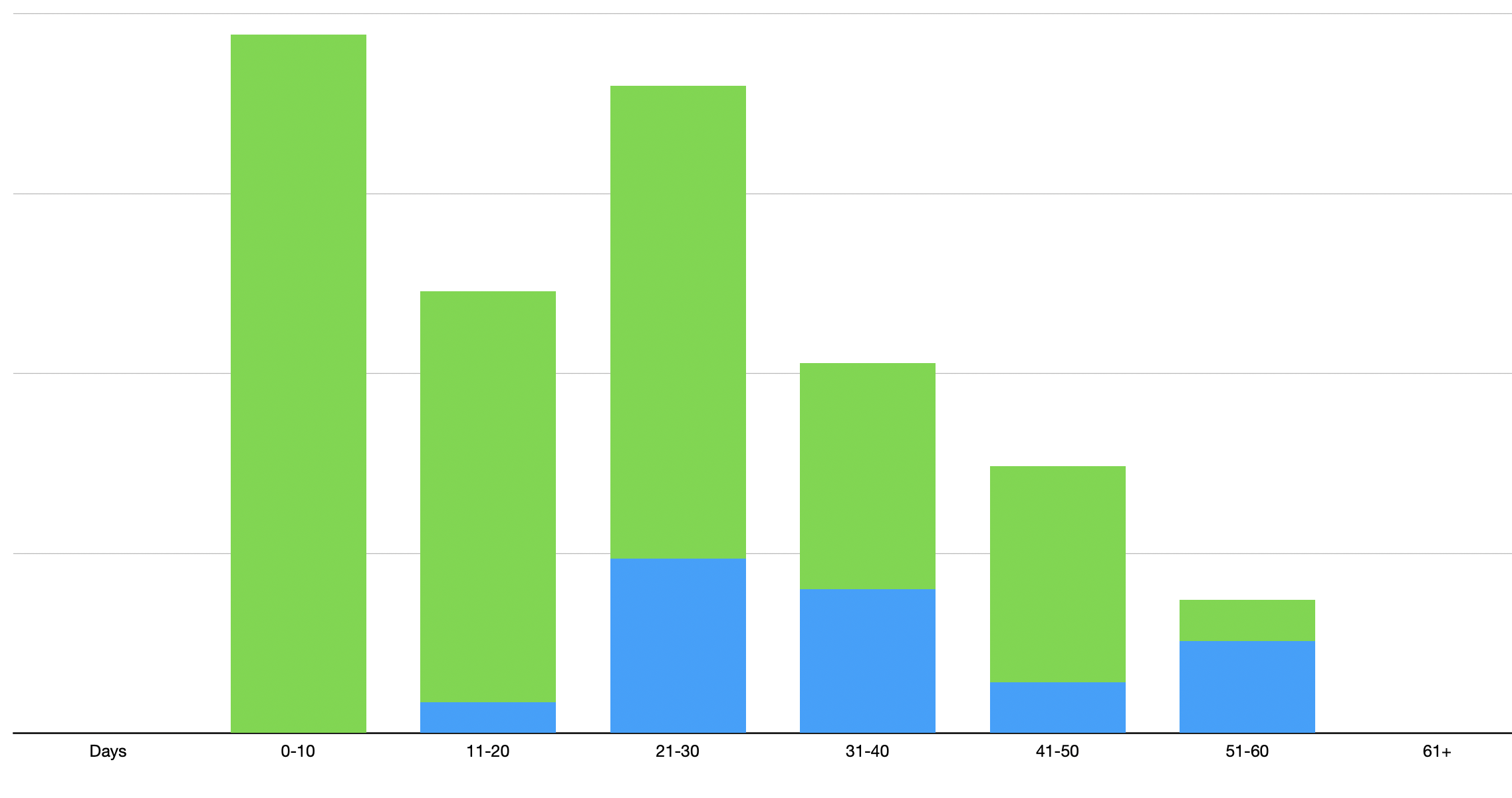
That said, you must appreciate that the 26-day figure is an average and the spread actually goes from 3 through to 60 days, depending upon a range of factors – the two most prominent of which are the complexity of your project and how quickly you respond to assessor questions.
The chart below shows the typical spread of projects, with the horizontal axis showing the typical number of days. On the graph, the green bar reflects the volume of refusals and the blue bar reflects the volume of endorsements granted.
The assessment
The assessor will now commence their activities. They will read your business plan and attachments in full, and spend time performing their own research to investigate the proposition and form an opinion. The decision will be based upon a combination of their research and knowledge (sector-based and entrepreneurial) but must reflect the rationale for this visa route and the immigration rules.
During the assessment, the assessor may contact the applicant to request further information – but this is not mandatory. The majority of projects will reach a decision without any contact with the applicant. Contact is simply made when clarification or further information is required.
It should be noted that AI is not used to perform an assessment. Assessors may use a variety of tools to gain a further opinion or perform their research, but the assessment is performed by an experienced human.
In addition, the assessor's view is not final. Assessors are engaged to provide their experienced opinion on a business proposition, which is then presented to our panel.
The panel
Once the assessor has completed their assessment, they present it at a panel meeting with one of our lead assessors. The lead assessor makes the final decision on whether to endorse or refuse the application.
Lead assessors review every application we endorse and refuse, which gives them a broad view across all the applications we receive. This adds an extra layer of consistency to every decision. For example, a lead assessor may recognise that a proposition is very similar to others we have already seen, which can affect how it is judged on innovation and on the genuineness of the applicant.
The lead assessor may endorse or refuse the application, or ask the assessor to clarify certain points before making a final decision.
Due Diligence
If a project is approved at the panel, it then progresses to the due diligence stage. This requires checking the applicant's history and any further documentation sent, including the availability of funding.
The assessor will also make contact with the applicant to perform a formal interview. This is a straightforward conversation and a chance for you to talk us through your business plan in your own words, answer any remaining questions, and tell us more about yourself and your plans as an entrepreneur. As required by the Home Office, we will record the interview.
Sending the decision
All of the information throughout every stage – from the point of expression of interest to the point at which the applicant is informed of the decision – is recorded on our internal system. Once the final decision has been made, our system compiles the acceptance or refusal letter using the notes entered by the case and lead assessors.
We then send the letter to the applicant and, in the case of endorsements, to the Home Office.
Second assessments
In the case of refusals, the applicant is presented with the chance for a second assessment. This allows us to clarify any issues the assessor misunderstood, or to consider small amounts of information the applicant may have missed in the original application. It does not permit the further development or rewriting of an application.
In these cases, the second assessment will be presented to the original assessor, who will be asked to consider it with respect to their reasons for the original refusal. This process must be completed using the provided form, and if the assessor requires additional information, they will request it directly from the applicant.
The success rate for second assessments is currently around 3% (as of autumn 2026). Whilst this may be considered low, it reflects the fact that our assessors tend to get it right first time. However, it also shows that in some cases, a little more information has led to reconsideration and the awarding of an endorsement.
Appeals
If a second assessment is not successful, the applicant has the right to appeal the decision. In these cases, the information submitted will be presented to a separate assessor, who will determine whether the original assessor made the correct decision with the information made available to them. Again, it is not a chance to submit further information or amend the project.
The success rate for appeals is under 1% – but there are a number of appeals that have been successful. Once again, this reflects the fact that our assessors tend to make the right decision (with respect to the rules for this visa route) first time.
Summary
We hope that this has helped you understand what happens in an assessment. If you have further questions, we are always happy to answer them in our live sessions – for further information on these sessions, please see our events page:
 Innovator International